
Dental Implants in Kanpur
Home / Dental Implants in Kanpur
What Are Dental Implants?
A dental implant is an artificial tooth root made of biocompatible titanium. It is implanted surgically within the jawbone and becomes one with the bone in a process known as osseointegration. This bonding produces a firm foundation for the restoration of replacement teeth like crowns, bridges, or dentures.
Unlike removable dentures or conventional bridges, implants perform exactly like natural teeth. They deliver strength, stability, and comfort, enabling you to chew, speak, and smile with confidence.
When Dental Implants Should Be Considered
You may need dental implants if:
-
You have one or more missing teeth -
You want a fixed, long-term solution instead of removable dentures -
You have healthy gums and sufficient jawbone density -
You want to restore confidence in your smile and normal chewing function


Procedure for Treatment
Step-by-Step Dental Implant Procedure:
-
Consultation & Diagnosis: Complete oral examination and digital scans. -
Implant Placement: Titanium post is inserted into the jawbone under local anesthesia. -
Healing Phase: The implant integrates with the bone (osseointegration). -
Abutment Placement: Connector is fixed after healing. -
Crown Attachment: A natural-looking crown is placed, completing your new smile
Benefits of Dental Implants
“Restore your smile, confidence, and oral health with our advanced dental implant treatments in Kanpur.”
-
Look and feel like natural teeth -
Long-lasting and durable (can last a lifetime with care) -
Improve speech and chewing ability -
Preserve jawbone and facial structure -
No need for adhesives like dentures -
Protects healthy adjacent teeth -
Boosts confidence and improves smile aesthetics
Risks of Dental Implants
While dental implants are highly successful, like any surgery, they carry some risks:
-
Infection at the Implant Site -
Failure to fuse with the bone may cause instability or failure. -
Nerve Damage may lead to temporary numbness or tingling in the lips, chin, or gums. -
Sinus Issues -
Bone Loss Around Implant -
Gums may recede, exposing the metal post and affecting aesthetics.
Before & After Dental Implant
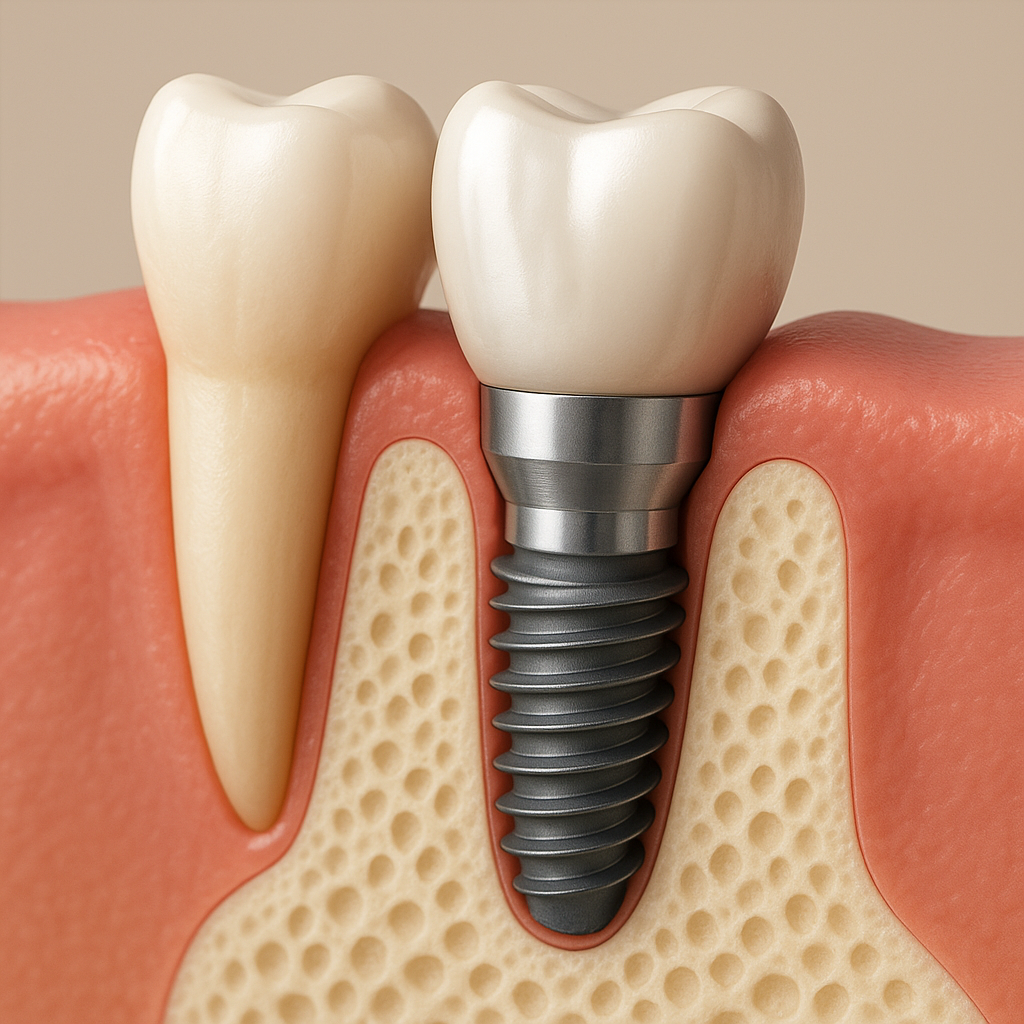
After
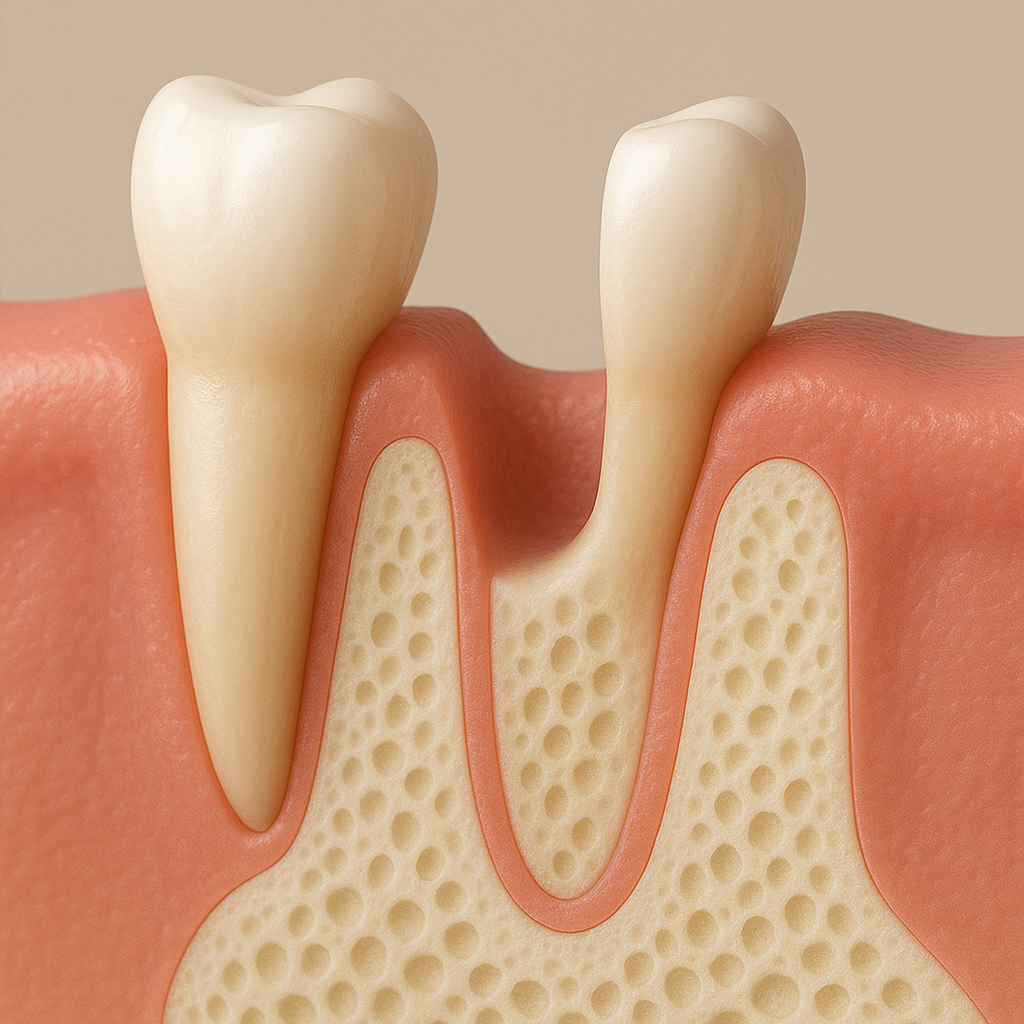
Before
Types of Dental Implants
Various implant options are available based on how many teeth you require replacing and your jawbone status:
Single Tooth Implant
Ideal for replacing one missing tooth without altering adjacent teeth. A single implant is topped with a dental crown that looks and functions like a real tooth.
Multiple Tooth Implants
When two or more teeth are missing. Implants support a bridge without affecting healthy neighboring teeth, providing a stable and long-lasting solution.
Full Mouth Implants (All-on-4 / All-on-6)
These procedures substitute a full arch of teeth with 4 or 6 implants serving as anchors. These are an excellent option to regular full dentures, providing greater support and comfort.
Immediate Load Implants
Also referred to as same-day implants, these permit immediate placement of a temporary crown following implant placement. Not all patients are suitable for this procedure, as it relies on bone density and the overall health of the mouth.
FAQS
Are dental implants painful?
Dental implant surgery is conducted under local anesthesia, so patients tend to experience minimal discomfort during the procedure. Slight soreness or swelling may be experienced afterwards, which can be alleviated with medication prescribed by the dentist.
How long can dental implants last?
Dental implants, with proper maintenance, last a lifetime. A regular check-up at the dentist, proper oral hygiene, and preventing habits such as smoking or grinding the teeth ensure their longevity.
Who can receive dental implants?
Most healthy adults with enough jawbone density are qualified for implants. Those with chronic illnesses such as uncontrolled diabetes or heavy smokers will need extra assessment.
How long is the dental implant procedure?
The entire treatment may take several months. This involves implant placement, osseointegration healing time (when the implant integrates with the jawbone), and final placement of the crown.
Do dental implants ever fail?
Although dental implants have a greater than 95% success rate, failure can result from infection, inadequate bone quality, or lack of proper care. Timely discovery and early treatment reduce complications.
Are dental implants superior to dentures or bridges?
Yes. Unlike dentures or bridges, dental implants maintain jawbone health, stop tooth shifting, and act similarly to natural teeth, providing a long-term and more stable option.
Do dental implants need special care?
Dental implants should have the same oral hygiene regimen as natural teeth, such as brushing, flossing, and routine dental examinations. Evading hard foods and bad habits also promote implant health.
Ready to restore your smile with dental implants in Kanpur?
Book your consultation with Royal Oral & Dental Clinic today.